
Every summer, one of the many public spaces in the area in which I live in South Dublin, is temporarily colonised by live music producers. Vast quantities of trussing and tarpaulin are off-loaded into what is normally a sprawling, sedate setting around Marlay Park, in the foothills of the Dublin Mountains, and unsettle it for a month or so. For four weeks the parish is augmented by a migrant population of stage-builders, electricians and road crews, most of them in elaborate shorts, steel-capped working boots and vintage touring t-shirts.
With their laminates, mini-torches and over-sized fobs, this working crew is simply passing through: unlikely as it sounds, our manor has become another layover on Europe’s rock and roll highway. Roskilde, Sziget, Primavera, Glastonbury, Ballinteer. Whoever would have thought it?
Earlier this summer Marlay hosted back-to-back live shows by Dermot Kennedy and a pair of one-offs by The Weeknd and Def Leppard. Calvin Harris was the star-turn at the Longitude weekender and, between appearances in Miami and Ibiza, catapulted South Dublin into a frame among the world’s funkiest live festival locations. In his tour diary, at any rate. The Arctic Monkeys took sick and cancelled late on us, much to my own personal chagrin but, in an impressive act of recovery, they made it to Glastonbury a couple of days later where they played a distinctly unspectacular set.
That last-minute no-show was the closest we came to any unscripted drama during this summer’s series at Marlay. The concerts went off without too much bruhaha and the majority of those who fetched up in Ballinteer – performers, punters, hawkers, and gawkers – did so with the good grace and manners we associate with self-respecting music fans, most of whom simply want to have a good time.
The curtain comes down quickly enough too. Within hours of the final show in the recent run – a Def Leppard best-of set – the process to strip the park was well underway and the circus was already moving out and moving on. Scaffolding, banners, and buntings are decommissioned, the portaloos and metal barriers are removed from the grass verges on the approach roads to the venue and the articulated lorries depart for the ferries and back out into the rest of the summer.
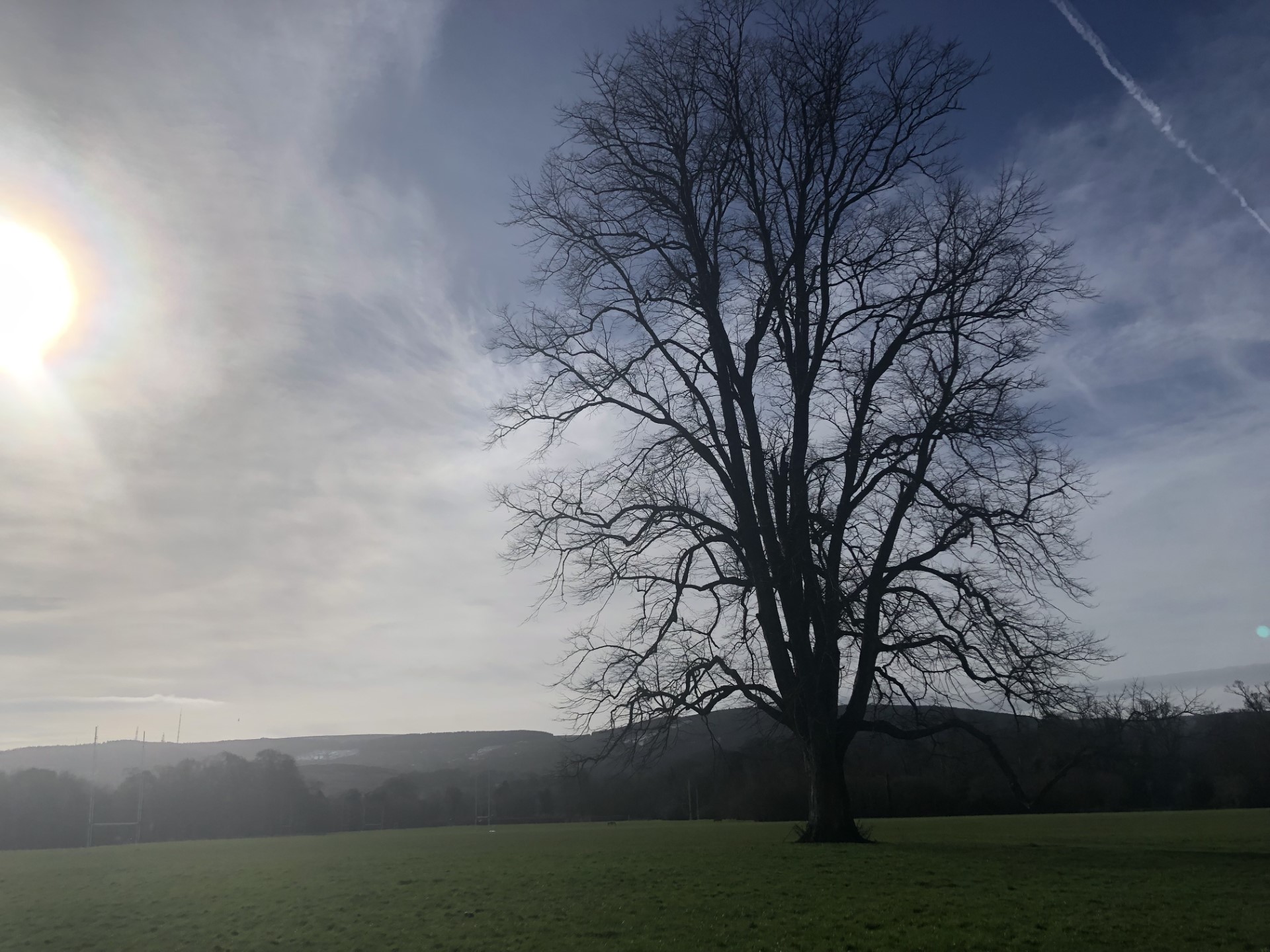
Once the mixing desks, lasers and back-drops have been de-rigged and boxed up in their flight cases, Marlay reverts to a life au naturel, de-botoxed. And after the dry-ice lifts, the raw promise and glamour that underpin the rock and roll experience is exposed. Live music – be that indoors or out – looks very different with its make-up off, caught in the cold light of morning.
Marlay hosted its first live shows in 2001 when the redoubtable David Gray, then at the apex of his career, headlined three consecutive nights, one of which took place in appalling weather, during which the band had to briefly leave the stage. Memories of that show among locals are mixed, informed, one suspects, more by the inconvenience that goes with the staging of large events in a residential area for the first time than by the quality of David’s performance or the contents of his set.
One of the better-known locals who advocated for the Marlay series was Tom Kitt, a Fianna Fáil TD well-known for his interest in rock music and then serving a stretch as Minister of State at the Department of Enterprise, Trade and Employment. In the great traditions of the small world, one of Tom Kitt’s sons, David Kitt, is now a member of David Gray’s live retinue and performed with him on the recent ‘Skellig’ album and the tour that supported it.
The capacity at Marlay back in 2001 was capped at 12,000, an obvious starting point in any assessment of how the series has developed since: this summer, Dermot Kennedy attracted 80,000 through the gates there over two nights. The diversity of the line-ups has also grown exponentially. That first season also featured shows by Sting and Van Morrison, fellow travellers with David Gray in what some might refer to as an easy listening section. The 300-acre park, developed in the late 1700s by the La Touche family, has since hosted the far more angular likes of REM, Arcade Fire, Pixies, Coldplay, Beck, Radiohead, and Foo Fighters, as well as a number of earnest local plodders.
Since 2015, the Ballinteer Saint John’s GAA club, has been a key cog in what is a successful cross-community effort involving various elements. It’s club-house backs onto the public fields at Marlay –where we play the bulk of our games – and is a distinctive totem for those visiting the area. On the days of the concerts, the club provides a cohort of volunteers to assist the promoters, the local council and An Garda Siochána in the practical running of the events and, in return, receives a decent stipend. Its an effective and lucrative relationship.
For the duration of the concert series, the clubhouse becomes an ad-hoc Garda base and we become a pivot at the core of the whole operation: a check-in point for those volunteering their time and a safe space for those who, for various reasons, aren’t entirely sure where they are or how they got there. Ballinteer Saint John’s is a visible presence in the community at the best of times, but the live shows escalate this aspect onto another level entirely and open us up to those who otherwise mightn’t ever come near us. In this sense, and without gilding the lily, the story of the concert series at Marlay is part of another story in the development of modern Ireland.
Some of us are around long enough to remember when rock and roll and Gaelic Games just didn’t mix, at least not overtly. The GAA is a cultural as well as a sporting body and, for the first one hundred years of its existence, its remit in that space was defined very narrowly. In respect of popular and contemporary music, this was all the more so. And then Siamsa Cois Laoí happened.
In 1978, the North Cork-born promoter, Oliver Barry, working with the Cork County GAA board, launched Siamsa, a one-afternoon-a-year, live music fundraiser held at the recently opened Páirc Uí Chaoimh. That series – pointedly titled in the first language of both the Irish state and the Gaelic Athletic Association – ran for eight years and led, directly, to U2’s triumphant show in Croke Park in 1985 and the Féile: Trip to Tipp festival that took place in Thurles for the first time in 1990.
The histories of both Siamsa and Féile, and the thinking behind them – both events were conceived in order to subvent building debts at Páirc Uí Chaoimh and Semple Stadium respectively – are covered in detail in various pieces here and here
At a distance of almost fifty years, those early Siamsa shows now look deceptively quaint, conceived as they were through the most pinched point of the GAA’s cultural lens. Initially, there wasn’t an amplified guitar or a greasy rocker allowed within an arse’s roar of the holy ground. But by 1984 – the year that marked the centenary of the founding of the GAA – the likes of Kris Kristofferson, Joan Baez, Don McLean and even Leo Sayer had headlined Siamsa, alongside such hardy annuals as The Wolfe Tones, The Furey Brothers and The Dubliners. The tills rang out in tune with the folk-and-trad infused line-ups until 1985, when the final Siamsa concert was headlined by Status Quo, the denim-clad London pub-rockers.
That same year Croke Park, the biggest stadium in Ireland and the venerated home of the GAA, marked an important developmental step of its own. A decade after the McNamee Report had outlined a plan for the continued development – commercial and otherwise, of the GAA – the American singer-songwriter, Neil Diamond, became the first international pop star to perform there. Opening a show that was promoted by Jim Aiken, a former Armagh senior footballer and one of the most influential figures in the history of popular culture in modern Ireland, Diamond arrived on-stage wielding a hurley and sliothar. Using a cack-handed grip, he belted the ball out into the seated audience. An Poc Fada this most certainly wasn’t.
The following summer, Aiken staged U2’s ‘A Sort of Homecoming’ tour at Croke Park. The 60,000 who fetched up in Dublin 3 saw a local outfit that was about to explode internationally, as well as a support bill that included the emerging American guitar band, REM. By so doing, the promoter and the GAA had opened the association’s turnstiles – and what then passed for it’s commercial wing – to far broader breadth of international popular culture, and there was no going back.
Ireland has come a long way in the four decades since, and the point that a regular revenue stream now comes into a local GAA club in Dublin from the proceeds of rock and roll shows can’t be under-estimated. It’s a point that’s certainly not lost among those members of our club who volunteer their time to work various roles on these shows and I know that well: for the last number of years, I have been one of them.
I often suggest to those who want an insight into how Ireland really works that they’d do worse than attend the funeral of someone who was centrally involved in any aspect of public life here, especially outside of Dublin. Rural funerals can often be spectacularly well-run productions: at a big farewell I attended in West Cork earlier this year, it was obvious to all-comers that in marking the death of one of its own, the community in Union Hall was also making a series of statements to the world outside of it. This is us, here we are, good things and bad things happen here, and we all go on together.
It is a way of thinking that also defines many of the leading clubs and associations, schools, and work-places all over Ireland, and its one of the more positive aspects of life up in Ballinteer. The concerts give us a sense – from the youngest among us to the more worldly – that we’re part of a worthwhile local initiative, and we fetch up in numbers because of that. Those who volunteer their time do so because, simply, they can and they feel they should. On the day that The Weeknd played at Marlay this summer, for instance, we provided over 200 community volunteers to the event.
The stewards are billeted at various locations all around the parish and their primary function is very simple: we work alongside the promoters and An Garda Siochána to get people in and out of the venue as quickly and as safely as we can. And, once the shows are over, we help them back towards those locations where their parents and guardians are expecting them, onto various transport routes and hopefully get them home as efficiently as we can.
Like many of those who subscribe to this blog, I can remember well when security at live outdoor shows in Ireland was the preserve of psychotic biker gangs and when basic sanitary and health and safety considerations were non-existent. The concept of stewarding – never mind community stewarding – was a spectacularly primal one. And so, with that in mind, and having been touch-tight to the summer series in Marlay, a couple of points are worth noting.
Firstly: that Dermot Kennedy can bring back-to-back crowds of 40,000 to a pair of outdoor shows in Dublin 14 is, to me, an enormous eye-opener. From my perch at an estate facing the venue’s main entrance, I could clearly make out the size, shape and constituency of those attending: never previously have I seen so many families go to live music shows together.
At the other end of the telescope, Longitude has traditionally been one of the more mis-represented festival shows in the history of Irish entertainment. Yet another rite of passage for the nation’s secondary school-goers, it rolls to its own rhythm and its own beat, its line-ups varied and often puzzling: it operates on an ethos of rack ‘em, stack ‘em and pack ‘em. And with booze strictly off-limits for the bulk of the audience once they get inside the venue, Longitude is that rare live music exception: many of those attending arrive way more tanked than they are when they leave.
Once the large crowds start to disperse, the volunteer group assumes the shepherd position. Taking our cues from ‘One Man and His Dog,’ the callow legs and tired brains of many of those who’ve been on their feet inside for hours, are directed to specific locations nearby from which buses, coaches and often frantic parents have assumed stand-by positions. Most of those who have questions for us after curfew are invariably looking to reach the sanctity of one of the primary meeting points: the fabled car-park at the SuperValu in Ballinteer. Which, to many of those attending Longitude, might as well be a global heritage site protected by an ECO UNESCO order.
Almost all of them courteous to a fault, those who’ve braved the often bizarrely-constructed Longitude line-ups are deserving of all and any help we can give them. From experience, they’re mostly fun-loving, colourful and energetic, so much so that one might be forgiven for thinking that the future of the country is actually in safe hands. As I told your researcher there, Joe, the kids are alright.
Marlay has an awful lot going for it and, on several levels, is far more than just a public park. Because of its size and the breadth of activity within it on a daily basis, you could say it’s the cardo of the district it dominates. A similar case can be made for many of Ireland’s other public amenities: from a Dublin perspective, this could include several of its more prominent spaces, most notably at Saint Anne’s Park in Raheny, Fairview Park in Dublin 3, The Iveagh Gardens in the middle of the city and around the grounds at Malahide Castle. In which quality live music during the summer months has now become a regular feature.
Notwithstanding the legitimate concerns of residents, ecologists and others with an aversion to the disruption of the quiet and the natural order, this is, in my view, overwhelmingly positive. If Ireland’s public parks can be used for sport, recreation and business, they also need to be used for arts and culture, and this latest chapter in the history of outdoor entertainment in Ireland is clearly a welcome one.
Back in Ballinteer, meanwhile, Marlay Park has changed its hue once again. The girders, beams and rods have been replaced by a different brand of iron and steel as the various Saint John’s panels prepare for the white heat of championship in the late summer. A different kind of showbusiness and a different brand of glamour but no less of a full-on rock and roll experience.


 The Blackpool Sentinel
Leave a comment