
One of the more despairing aspects to this collection of random pieces about music and the Irish music industry is the constant spectre of death. The Blackpool Sentinel has endured for almost ten years now and, when we first started imposing on your patience, little did we imagine that we’d be dealing with so much of the dark stuff. Your hosts here have discussed more than once the idea of just exclusively writing up death notices for rock and rollers we have known and doing a contra deal with www.rip.ie.
During the mid-1990s, an Irish musician and songwriter I knew was struggling to find a company that would insure his car. Then in his late 20s and driving a modest, second-hand beater, he’d made a novice mistake compiling his application: he told his prospective broker that he was a singer in a rock band. The message back to him was simple: musicians posed a serious risk – to insurers and to themselves – and just weren’t good for business. Off the back of which no broker would quote him for life assurance.
Looking back over the history of The Blackpool Sentinel, I’m struck by how so many of those we always considered bullet-proof have fallen over-board since we took our first steps here. And this is even allowing for the vagaries of the standard rock ‘n’ roll lifestyle. Out in the real world, we’re regularly reminded that people are living longer, and that life expectancy has stretched out beyond all recognition. But musicians, creatives and those working in, and around popular entertainment appear to be bucking this trend and can take little comfort from the profound developments across the sciences. Is there not some AI-derived programme or cutting-edge medical science development out there that can give musicians a fair crack at longevity?
There was much discussion last year about Christy Dignam, Sinéad O’Connor and Shane MacGowan, three exceptional and challenging writers and performers who died in various circumstances in 2023. All of them dead far too early, they’ll be missed as much by the popular media as they will be by their families, friends, and fans. Throughout their careers, all three provided a wealth of great copy and featured as prominently on the news pages as they did on the culture and arts ones. And at key junctions in their complicated lives, the popular media failed them: there were just too many occasions when they weren’t properly protected by those who really should have known better.
From working recently with a mountain of broadcast and print archive, its obvious that all three of them were often just casually rolled out in media circles as freak shows and exposed. I’m as guilty as anyone in this respect, I think, but I have plenty of company. Every domestic media outlet of note, in granting regular coverage to Christy Dignam, Sinéad O’Connor, and Shane McGowan – three of the most complex figures in popular Irish entertainment – could have exercised far more of a duty of care. Personal welfare and well-being need to always trump tawdry exclusivity and cheap headlines.
Christy, Sinéad and Shane lived considerable tracts of their lives in the public eye and maybe far too much at times: this comes with the territory they occupied but there’s a point, surely, beyond which it needn’t? There was a prurience to much of the coverage of their careers that extended also into how they were received in death, something that once again reminded me of the twin-blades of fame. The public stage can be as lonely and unforgiving as it can be mesmeric and enthralling and like for Paddy McAloon’s old magician, whose career he recalls on Prefab Sprout’s ‘Crimson Red’ album, ‘Death is a lousy disappearing act’.
McAloon’s tender brand of musical sorcery wouldn’t have been lost on my former colleague, Ian McGarry, who also died last year. Ian enjoyed as remarkable and as colourful a career in Irish entertainment as anyone but, because much of that six decades was spent either behind the traps as a drummer and percussionist, behind a camera as a studio operator and beyond the glare as a television producer and director, his work and career doesn’t attract the attention it might otherwise do.
I knew Ian as many of his colleagues did: he wore many hats, was imbued with a fiercely and quietly competitive streak and excelled in a multitude of disciplines. To my fellow music anoraks, he’ll forever be the drummer with Bluesville, the Ian Whitcomb-led, Trinty College-based outfit who became the first Irish group to break the Billboard Top Ten in America with a powerful single, ‘You Turn Me On,’ in 1965. To a coterie of pop fanatics in another realm, he’ll be the mild-mannered, unflappable Dubliner who directed the Eurovision Song Contest twice, long before it became just another generic, one-sized television format. To others again he’ll be the founder of The Action – the jazz-fused combo led by the singer, Colm Wilkinson, and featuring another former RTÉ colleague of mine, Brian Lynch, on bass guitar. But by any measure, Ian’s thumbprints are all over the development of entertainment in modern Ireland and he is an imposing and important character.
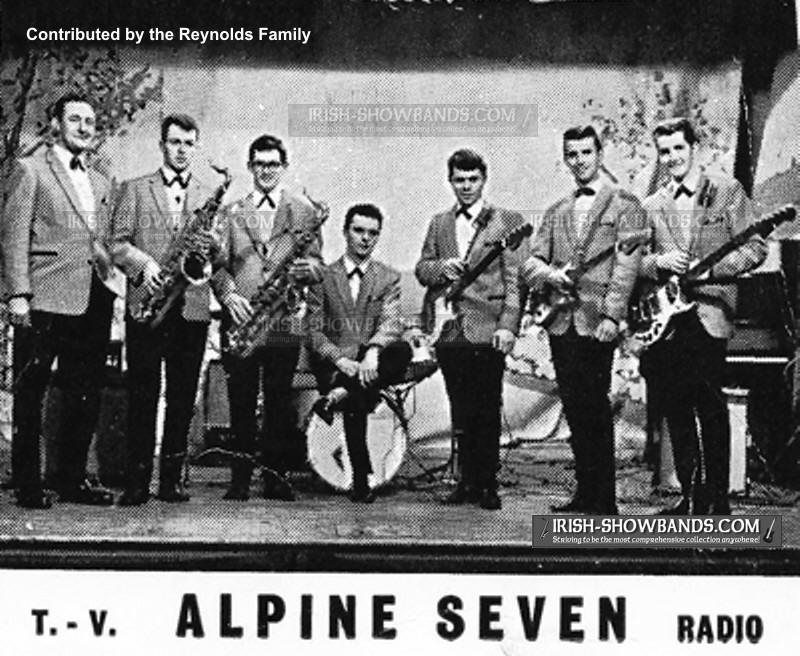
Given the breadth of his achievements during his broadcasting career, Ian’s prowess as a musician is often overlooked. He was a life-long jazz-lover who brought finesse and no little rizz to The Alpine Seven showband, and subsequently to Bluesville and The Action, before joining RTÉ in the late 1960s, initially as a timpani player in the national concert orchestra. Like Woody Allen’s ‘Zelig,’ he pops up in various chapters of Ireland’s popular cultural history and in a variety of different guises. He even features on the last ever Late Late Show hosted by Gay Byrne in May, 1999, not as a director or producer but rather as a drummer with the Clipper Carlton Showband, one of the late presenter’s favourite outfits who reformed specially for the occasion.
Scan the internal RTÉ internal archives and staff magazines and there he is, replete in a padded suit as a member of the in-house rallying club during the 1970s. Or as a marathon runner competing yet another long-distance haul simply because he could. His passion for skiing saw him put his money where his mouth was and he opened a ski school in France, to which he de-camped on a yearly basis. He clearly excelled at whatever he decided to turn his hands to and he turned those hands to an awful lot of things over the course of a long, varied, and distinguished career.
But it is Ian’s love for and knowledge of popular music that led me into more than one rabbit hole with him over the years. I’d go to him with the most bizarre enquiries: requests to double-check the names and locations of various beat clubs from mid-1960s Dublin, for contacts for veteran music promoters, leads to particular pieces of presumed-lost performances from the archives in radio and television. I first learnt of his illness when I went looking for him, as I often did, seeking information about The Occasion at the Castle, a live music festival in Castlebar he was attached to as a creative advisor during the early 1980s. Of course, all I was really doing was engaging Ian in [long] conversation: apart from his numerous creative gifts he was an invaluable asset and the very best of what we might refer to as ‘the public service.’
Because of the life he led, and the myriad of his interests, you’d never know where those casual conversations would lead. One enquiry about another event in Castlebar – the Mayo town’s International Song contest, which he produced and directed for several years during the 1970s and 1980s – led us into a long riff about Eamon de Valera and censorship. And of course, there was an inevitable connection: Ian’s uncle, Seán McGarry, was a former commander of what we term ‘the old IRA’ and was among those who famously broke out of Lincoln jail alongside de Valera in 1919. With Ian, nothing surprised you.
One of my own favourite clips from the RTÉ television archives is already the subject of its own dedicated piece here. In a television studio in RTÉ in September, 1991, Paddy McAloon – the longtime creative and spiritual heartbeat of Prefab Sprout – shared a sound stage with the great American songwriter, Jimmy Webb. Together they performed one of Webb’s many exceptional compositions, ‘The Highwayman,’ backed by the RTÉ Concert Orchestra playing an arrangement scored by George Martin.
That performance was captured as part of a music series produced and directed by Ian, alongside two other RTÉ stalwarts, Niall Mathews and the late Adrian Cronin. ‘Eye On the Music’ was an ambitious eight-parter, hosted by the composer and music producer, Bill Whelan. A prime-time Sunday night series, it assembled a wide range of local and international acts to perform with Ireland’s most powerful orchestra and to discuss their work with the presenter. Among those who fetched up in Studio One in Montrose during the run were acts as diverse as Tanita Tikaram, Elmer Bernstein, The Trio Bulgarka, The Pale, The Corrs, Mark Nevin, Beverley Craven, Lloyd Cole and Engine Alley. Bill Whelan himself scored and conducted almost all the orchestral arrangements.
The following year, BBC television debuted a new live music show of its own – ‘Later with Jools Holland’ – with the one-time Squeeze piano man in a similar role to that played by Whelan months previously in Donnybrook.
Directing live music performance using multiple cameras is a rock on which many a television tyro has perished. It’s a skill that’s far more difficult to master than one might think and, more often than not, is done to a fairly workmanlike standard. It is also a platform from which many careers have been launched: the Emmy-nominated, Wexford-born Declan Lowney being a local case in point.
As a classically trained musician who could both sight-read scripts, count bars and just instinctively feel music, Ian McGarry was a highly skilled director. He was set apart from most of his peers by virtue of a unique ability: he could visualise music as he felt it.
You’ll often hear it said that the work of television and film directors often reflect aspects of their own personalities: from my own experience, this certainly rings true. I’ve worked with high-energy directors who brought personal chaos onto set and, through that, onto screen. I’ve also worked with a number of calmer, more thoughtful directors who brought serenity and balm into what can often be fraught working environments. That exceptional clip of McAloon and Webb from ‘Eye on The Music’ certainly re-enforces this line of critical thinking.
Given the size, breadth, and sound of the orchestra, for instance, and the majesty of George Martin’s arrangement, the obvious thing to have done would have been to feature it prominently and place the performance around it. But Ian, in putting the music first, takes a different route: both McAloon and Webb are masterful storytellers and wordsmiths, and the director places his focus exclusively on that. Operating in an era before radio-controlled cameras, extended jib arms and extreme wide-angle lenses, the duet – as Ian interprets it – is rooted in the twin vocal performances. He uses relatively few shots, pops his shooting script with a number of perfectly measured tracking shots and is happy to capture the song’s verses in single close-ups. With an ace RTÉ studio camera crew working the floor, the pacing of this clip is stellar.
With the minimum of fuss, a music-loving director pulls a magnificent performance from both the songwriters and the production crew to produce a magical capture. But then Ian did this on a regular basis, and in a variety of different television genres: it was his stock-in-trade.
Ian McGarry died after a long illness in July, 2023, during a period when spectacular chaos was unfolding at RTÉ, the fall-out from which will have a profound impact on the broadcaster. As someone who was spectacularly unflappable, clear-thinking and who personified the concept of grace under pressure, it’s an irony that isn’t lost on those of us who remember him fondly.
His loss is as great as his contribution to popular entertainment in Ireland, and that is enormous.
CODA: This piece is for Pat Gleeson and Nick Kelly, both of whom we also lost in 2023. Wherever they are, I hope they’re singing.


 The Blackpool Sentinel
Thankyou so much for this brilliantly accurate and cleverly perceptive account about my beloved late husband, the exceptional Ian McGarry…
you nailed it!! 😘
LikeLike
Thanks so much for reading, Jane, Hopefully we captured some of Ian’s remarkable contribution to popular entertainment in Ireland. Mind yourself. Colm
LikeLike
So cool to read about the brilliant Ian McGarry. He was a beautiful soul and an incredible drummer and so much more. Thank you for this splendid profile.
LikeLike
Thanks so much for reading, BP. We really appreciate it. Colm
LikeLike
wonderful piece, captures Ian so well. the “go to” Ian for information and help was amazing. thank you
LikeLike
What a lovely tribute to such a talented man. I first met Ian on the set of a TV Show in the 80s, and about a decade ago, I interviewed him for my Whats Another Year book recalling many events including playing with the band in the pit of the Gaiety Theatre at the first Eurovision Song Contest that Ireland hosted in 1971. He has a story for every day of his life, and was so helpful to me. The ultimate gentleman.
Finally, to see his name mentioned in the same sentence as Paddy McAloon is the ultimate accolade. In my lifetime on this earth, Prefab Sprout are my all-time favourite group, and to know Paddy & Ian worked together is heartwarming. Sleep well Ian.
LikeLike
Thanks v much, Mick. Really appreciate you taking the time to read and post. Colm
LikeLike
Spot on Colm. Ian was brilliant at whatever he turned his hand to, including the running! He had a lovely smile and was a great man to quietly encourage others. I was away last July and sorry to have learned just now that Ian had left us. Belated condolences to Jane and to all of Ian’s family and close friends.
LikeLike
GRMA, John. Thanks so much for the note and for reading. Colm
LikeLike