
Eamonn Crudden features prominently in any credible history of the Irish underground during the 1990s and beyond. A man of many talents, he was one of those who founded the Dead Elvis label, home to several of Ireland’s more interesting, independent-spirited groups during this period.
In this piece, Eamonn writes about the Dead Elvis label and, especially, his involvement with The Wormholes, whose long-lost ‘Parijuana TK1’ album is finally launched this week.
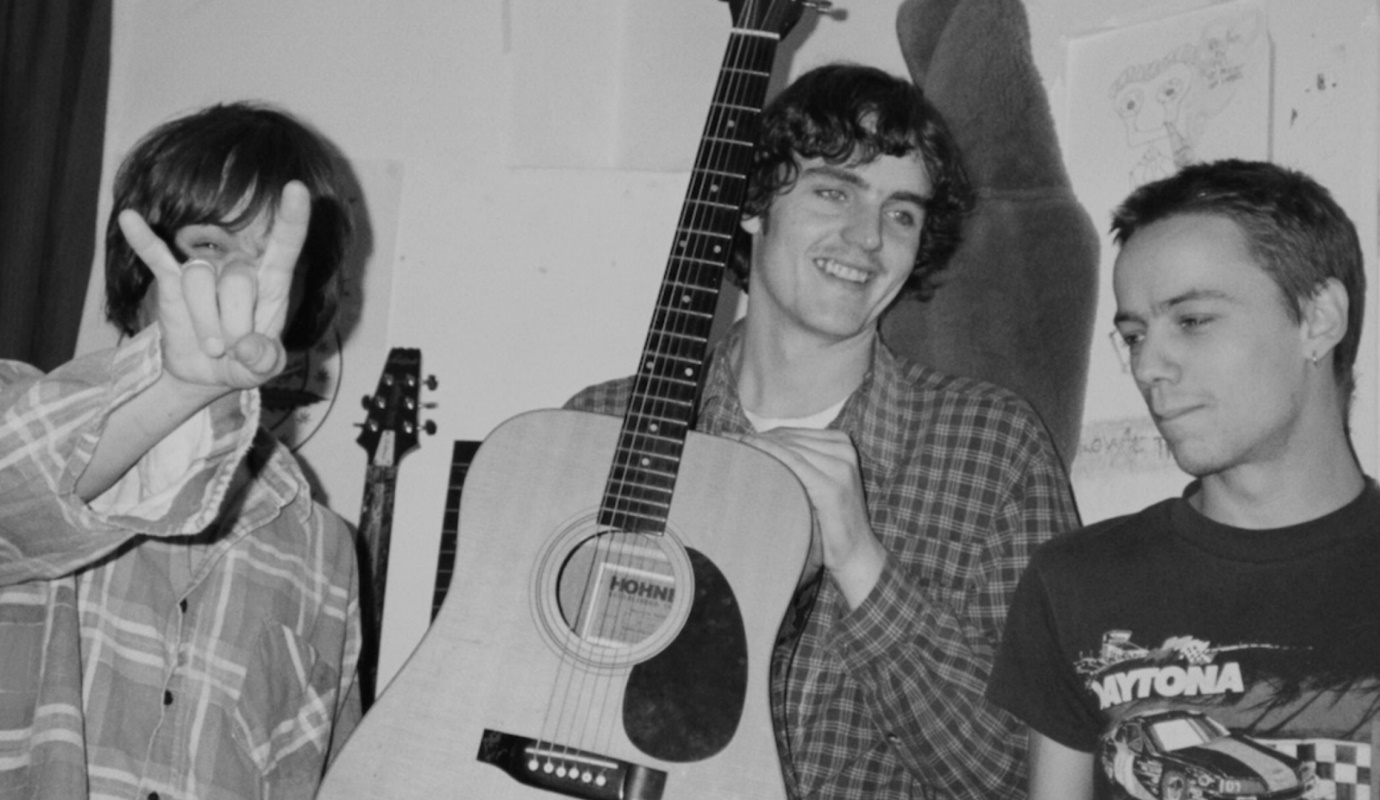
I spent the years 1994 to 1999 working with The Wormholes and releasing their music. From 1994 to 1997 I was also their manager. It was an unforgettable experience. Dave, Graham and Anto were from Ringsend from a very working-class background. Dave and Anto, who were identical twins, had lost their mum to cancer at an early age and had been brought up to adulthood by their dad Tommy who had been a docker. They were about 23 years old when I met them. Graham was only sixteen and he lived with his family at the time in a tiny ‘extension’ to the old Methodist Mission Hall in Ringsend. It was a kind of culture shock for me meeting them as they stood out like a sore thumb – because of their backgrounds – from the quite genteel indie scene in the city at the time.
By the time I met them they were already the fully formed article that would, within a few short months, release their ‘Chicks Dig Scars’ debut on the newly formed Dead Elvis label. The label was set up by myself, Marc Carolan, my brother Óg and Eamonn Doyle, for the express purpose of doing a Wormholes release. It is crazy in retrospect to remember that the original plan was for a one-off release of an EP. They raised the level of our ambition by proceeding over a few days – working with Marc in an improvised eight track studio in a basement – to create an amazing album-length set of tracks. We couldn’t not release it.
I firmly believe that the launch in Whelan’s of that album [where they were supported by Pet Lamb and In Motion, two bands with much higher profiles than theirs at the time] was responsible for an absolute torrent of albums from indie and underground acts in the half a decade that followed. On the night the cover charge was £5 and everyone got a copy of the CD album. We almost covered our costs for the whole operation in a single night as the place was rammed to the rafters. Their ambition and distinct lack of interest in chasing a record deal – and their superb debut album – worked to raise the ambitions of the whole scene at the time and an absolute deluge of amazing independent album releases followed.
It wasn’t the only time they had a ripple effect on music in an Irish context. After an unproductive time signed to Roadrunner Records who had re-released ‘Chicks Dig Scars,’ they, as Neil Young once put it, headed for the ditch by firstly embracing longer song times, then extemporisation and then straight improvisations over two short run very independent CD albums. I really believe their haphazard trip from 1996 to 1999 strongly influenced an emerging wave/scene of more out, improvisational, extemporised, experimental, and plain risky music in Dublin particularly. Dave and Anto eventually – in the early 2000s – became key participants in this scene as part of E+S=B [Electronic Sensoria Band] with Fergus Cullen. Anto and his partner Adrienne also contributed to this scene alongside Stephen Rennicks with a series of albums from their band Memory Cells.
Of course, it was not all a pretty picture. It was a rough experience doing long UK tours with little to no money while signed to Roadrunner Records. It was a rough experience dealing with a band who got very stuck into hard drug use as the years from 1996 to 1999 went by. It was a rough experience for them to realise post-1997 that the strong audiences they enjoyed from 1993-1996 were to quite an extent bewildered by their wilful pursuit of magic during 20-minute-long extemporisations. It was a rough experience for me realising in 1997 that the band I was purportedly managing was up for going totally behind my back to make an album for a label other than Dead Elvis. That album was the lost extremist classic, ‘Scorpio The Album,’ produced by Stano and released by Chuckin Bronchii in 1997.
At that point I pretty much stopped managing them. Their wilfulness in many departments had made it an impossible task and it was clear to me that what they were doing was something other than chasing any kind of large audience. They had also by then rejected out of hand their own planned ‘Parijuana’ album, which had been recorded with demo money from Roadrunner by Marc Carolan in seven overnight sessions in Sun Studio. To say this was tough to handle is an understatement. I still think the session and the album was their strongest work bar none. Back then I was bewildered by their decision to can it.
I got on with working on other Dead Elvis releases at the time. Problem was we three remaining had over-extended ourselves in the period from 1996 on after Eamonn Doyle left the label to concentrate on establishing D1 Recordings. Paying for studios after losing access to Fuse [the basement where Wormhole and other bands like Jubilee Allstars, In Motion and The Sewing Room made all their recordings for the label] killed us over about an 18-month period.
In 1997 the label essentially fell apart. I continued through 1996, 1997 and early 1998, sporadically helping to organise recording dates for The Wormholes in a variety of contexts. During this period, they worked quite a lot with Stan Erraught as producer in a variety of studios and simultaneously continued their uncompromising experiments with home recording. I even engineered and played on a bizarre session in my flat on Parnell Street late in this period. When Dead Elvis collapsed in 1997, I had made two outstanding commitments in terms of releases and at a certain point in 1999 – having decided to move on from full-on involvement in music – and – now as sole proprietor of the refashioned ‘Dead Elvis [and a Hunka Lisa Marie]’ – got a factory job to raise the dollars to fulfil these commitments before I moved on in life. The commitments were to release albums by Alan Lambert and The Wormholes.
The albums were ‘The Man Who Cycled to The Moon’ by Alan and ‘Parijuana: 4 Years in Captivity’ by The Wormholes. I knew the artists concerned well at the time and in both cases I knew they were sitting on literally years of amazing recordings. I put one condition on the releases. They had to fill the maximum run time of a CD – which at the time was seventy-two minutes. Other than that, I had no involvement in the tracks chosen. Both albums featured brown card ‘covers’ to shrink costs. Alan’s cover was made entirely by hand using a series of ink stamps. Alan provided the Chinese characters for ‘Fear’ and ‘Drugs’ for the face of the Wormholes CD. Little did he know he’d very shortly be becoming a new Wormhole. The one cost I didn’t cut was mastering, and Digital Pigeon – God bless them – did a great mastering job on both for a really very small fee.
I was feeling perverse and in a hurry as I planned my departure from music and from Dublin. I can be a competitive sort so – looking round me at the way our original Dead Elvis launch gig to cover the pressing costs model had been widely adopted by others – I decided that the last hurrah would be a gig with three bands in Eamonn Doran’s with a £5 cover charge where every paying customer would receive a copy of both the amazing 72-minute-long album releases.
By the date of the gig Graham had left The Wormholes. Dave and Anto were determined that it go ahead with them headlining. At that point it made sense to recruit Alan as a guitar player. After all, it was his launch too! Only problem was that Alan had never played in a rock band before and they had time for a single rehearsal.
The Wormhole Brothers being what they were meant this single rehearsal turned into an extended jam session and nothing they played during it was even loosely based on any of the music on either of their albums. Their headlining gig was – as a result – a 100% total improvisation. They were always pushing their no-holds barred extremism and moving forward. I could see the cost it came at for them but I still loved them for that absolute bloody mindedness of theirs.
The gig did cover the costs of the releases. Yay! I was free and had fulfilled my outstanding commitments. And that was it from me with music and related matters for the next 20 years until a combination of my kid being in a band and Wormholes reissues dragged me back into it for a bit.
Sooner rather than later, hopefully, I will tidy up the threads of my involvement with The Wormholes. I feel I owe it to them and particularly to Dave’s memory. I spent the guts of three years in his face constantly, being blown away by his band constantly, and it was a privilege to know him. He was a brave and original musician, and that’s something to be. He and his whole family treated me like I was absolutely one of them at that time, and that is something I will never forget.
Those threads? An unreleased album called ‘Death Comes to the Island’ by the iteration of the Wormholes that included Alan Lambert, produced by Alan. An unreleased and maybe irrecoverable monstrous pump organ-led half-an-album long track recorded in my home in 1998 that was meant to be called ‘Dark Side of the Spoon’ before Ministry popped up using the same name for an album in 1999. Keep watching the skies. Look out for broken cassettes in the post.
PARIJUANA: TK1 : A TRACK-BY-TRACK COMMENTARY
‘Riotman’
Wormhole were known from early on for the always transfixing and long, semi-improvised conclusions to their sets. They would basically flip from the prepared and rehearsed final tune of their set into wild extended improvisations, usually accompanied by improvised lyrics from Dave.
This improvisational element was very unusual in the context of the punk/indie scenes in Dublin of the time and, as time went by, the band extended this approach more and more. A handful of tracks recorded between 1995/6 – including this one, ‘Riotman’ – brought this approach into the studio. This is the original recording of the track.
It was eventually re-recorded from scratch [with Stan Erraught producing] for the ‘Parijuana – 4 years in Captivity’ album. The extended coda found on this version was not repeated on that second recording. The lyric always reminds me of a couple of things. One is the couple in the movie, ‘Badlands’. The other thing it brings to mind are the stories Dave repeatedly told me, when I was getting to know him initially, of the Ringsend kids repeatedly and violently running the cops out of their local park.
‘Out of Place’
This song went through a number of iterations, including an early rocked up version from 1994 which was eventually released on Parijuana: Four Years in Captivity’ in 1999. I will forever associate this track with touring with Trumans Water in the UK.
The band wanted to release the 1994 version and ‘Drive Dead Slow’ as a 7’ single but the plan never came to fruition. We loved touring with the Trumans as they were just dead witty and fun to be around. Their drummer’s catchphrase at the time was ‘there’s a RAT in my brain.’
Being more ‘experienced’ than us, old 35 mm still film canisters containing very, very potent marijuana were turning up at multiple tour stops for them before we would all arrive en masse at a given venue. I am laughing here remembering the quite macho bass player from a big 80s Irish avant-garde rock act who was driving our van. After partaking of too much of this stuff one day, he turned into a gibbering panic attack- stricken wreck in five minutes flat. We did warn him.
I love this track with its sly, class-envy lyric and compelling groove. Marc, as he often did when engineering their sessions, quickly extemporised some keys and added the bell sound. His touches help turn the grooving track into a wee slice of magic.
This track unlike every other track on this release WAS released in the 90s. It was the second track on the ‘Zip Up Your Boots for The Showbands’ compilation, released on Knee Jerk Records to coincide with ‘In the City,’ which was held in Dublin in September 1996.
At short notice, Óg Crudden from Dead Elvis somehow wrangled the cash from the Irish Trade Board to press that compilation. The Knee-Jerk ‘label’ was a one-off collaboration between the Dead Elvis and Blunt imprints.
‘Marshmallow’
This track was later re-recorded in lo-fi extremist style on a very broken 4-track with intermittently operating channels and included on ‘Scorpio the Album’, released by Chuckin Bronchii in 1997. ‘Scorpio’ was produced by Stano. That album was mainly recorded in Pulse Studios with some tracks, including the 4-track version of ‘Marshmallow’, recorded ‘on location’ in Ringsend. I much prefer this version.
The lyrics are full-on nihilistic: ‘You try to kill the drugs – but you know it’s a lie – I only feel good when I fry my mind – How can I change this world when I can’t say my own name?’ The vocal interactions between Dave and Graham on the track are pure 1995 Wormholes – raging – at the height of their game. Dave’s full-throated death rock and roll vocal in the outro raises the hairs on the back of my neck to this day.
‘Drive Dead Slow‘
This semi-improvised track did eventually appear in a ‘remix’ form on ‘Parijuana – 4 years in Captivity’. For that album Fergus Kelly improvised an additional overdub, with what I am pretty sure was a shehnai, onto this original mix. It was literally dubbed over a mix as the multi-racks of the Parijuana TK 1 session went AWOL in Sun Studios.
We were so broke at the time that the session was recorded onto ‘rented’ multitrack tape and mixed down to DAT before the end of the session. Who knows how long the track would have been if the multitrack tape Marc recorded it onto in Sun Studios hadn’t literally run out. When he was mixing the track down, he miked up the actual multitrack recorder to re-capture the distinct sound of the tape spooling off the reel and included that on the master.
‘Ashtray Blues’
A dark and violent role-play lyric from Dave and some crazed, Dylan-esque organ from, I guess, Marc. Very much sounds like ‘Tombstone Blues’ gone nightmare-ish to me. The song was later re-recorded in a session produced by Stan Erraught for the ‘Parijuana: 4 Years in Captivity’ album that was released in 1999.
The fact that Dave insisted on his coughing and spitting on the floor being included at the outset is the kind of detail this crew relished at the time. They wanted everything to be a rough edge. The nihilistic lyric reflects the fact that hard drugs were very much creeping into the Wormholes picture by this time.
Dave took on a series of violent anti-social personae in his lyrics around this point in the band’s history and I always thought this was very much influenced by his youth as a metalhead into Venom, Deicide and the like. I remember him constantly talking about Glen Benton. At one stage he quipped that he wanted their next publicity shot to be himself with poor Mr. Benton in a headlock.
‘Hotel Cash’
‘Hotel Cash’ is one of Graham’s country inflected tunes. ‘The hotel cash ain’t gonna last’ line – to me – obviously refers to the highs and lows of their accommodation arrangements around this time when abroad doing gigs. The band went in terms of accommodation over the course of 1994 to 1996 from the heights of the Columbia Hotel in London [when Roadrunner were bringing them over to sign them initially in 1994] – dropping down to lengthy stays in decidedly dodgy hotels in King’s Cross – and then rock-bottom times involving literally begging randomers and promoters for floor space on a couple of long UK tours with no ‘hotel cash’ whatsoever available. Not too bad though.
I can only recall a single night in the UK where we literally had nowhere to sleep and had to crash out on the side of the road in the overcrowded van. I also recall a bizarre night in Aberdeen where me and two of our party got completely separated from the rest of the crew and we ended up walking into a random working-class estate, hearing Madonna being blasted from one house with the lights on and knocking on the door.
A woman answered. She and her teen daughters were up late dancing round their living room. I explained our situation: lost, broke Irish musicians. We were immediately taken in and beds were made up for us on the living room floor! Ordinary decent people are everywhere! They fed us hearty breakfasts in the morning and we went back to the venue where the van and the rest of the crew were waiting for us.
‘Blame Superstition’
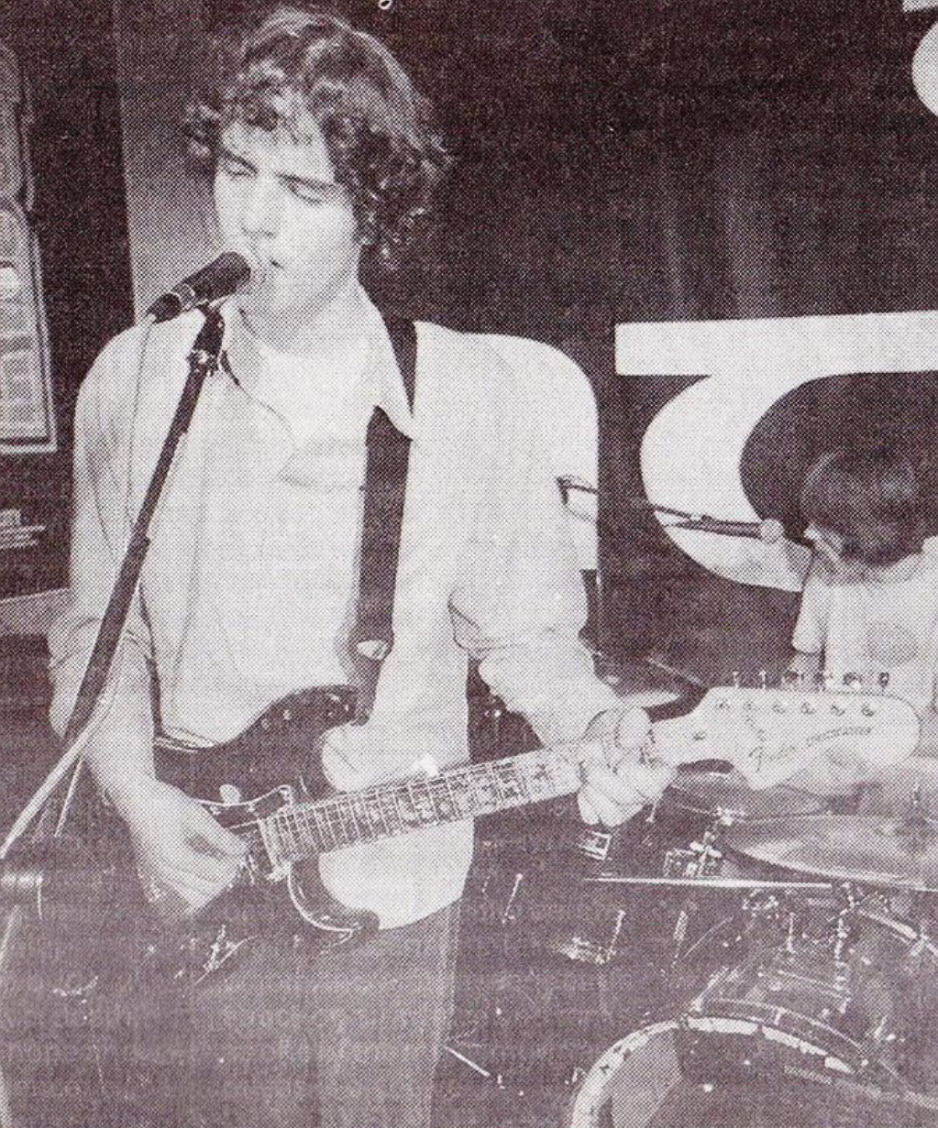
This performance which, except for Graham’s vocal, was as far as I can remember recorded ‘as live,’ reflects the fact that the band at that point had been gigging very very regularly for about two years and were cooking up a savage, head-banging grooving brew of Stooge/VU level mania.
The song was eventually re-recorded in Dirt Studios for the ‘Parijuana: 4 Years in Captivity’ album. That second version was produced by Stan Erraught and featured additional lyrics/vocals from Dave. Dave used a primitive electronic drum kit toy I picked up cheap somewhere along the way – rather than his own kit – for the drums on that second version. It’s available on Wormholes’ ‘You Never See the Stars When It Rains’ anthology on AllChival.
‘Go Under’
This country-flavoured track, led by Graham, with its uncharacteristically laid-back feel, was later re-recorded in a session produced by Stano for the band’s ‘Scorpio-The Album’ release on the Chuckin Bronchii label. That label was a project of Chane O’Reilly, formerly of notorious Dublin band Jam Jar Jail. As far as I can remember, it was Chane who first told me about Wormhole.
Jam Jar Jail played the first night of a short-lived club I ran in Fibber Magee’s on Parnell Street in Dublin, sometime in late 1993. Wormhole were the support act at Chane’s suggestion. They completely blew me away with their very Stooges set. They headlined the following week and the rest, as they say, is history. Graham’s dad was an active pub-type musician who had a proper fondness for country and western and you can totally hear that influence in Graham’s contribution to this track.
‘Radio Rock’
This very improvised track was eventually released on the ‘Parijuana: 4 Years in Captivity’ album which was released in 1999. It screams Butthole Surfers. The overdub of a radio interview is about an auction of a piece of moon rock: ‘It’s been offered up for sale. How much do you think you’re gonna get for it?’
Literally, during these sessions the band’s taste for forgetting about conventional songs, by and large, and going for something much more in the moment and way, way more extemporised, was making itself felt in a big way.
By 1997 they were heading far, far out in that direction. I clearly remember their ‘In the City’ gig in The Attic in September 1996. Their audience were expecting the usual, catchy, rocked-up toons from them. What they got instead was a 45-minute onslaught and elaboration of a single track called ‘Kontinental Kop’. The performance was lit by a single red beacon light in the totally darkened venue. Things were going off the rails and heading for the ditch, as yer man Shakey would say.
Parijuana TK 1 is available now on pre-order via All City Records / AllChival. The band launches the album in the Bello Bar, Dublin, on Saturday 9th September, with support from The Troubles. Some rare CD copies of the monumental, 72-minute long ‘Parijuana: 4 Years in Captivity’ will be available at that launch.


Leave a Reply