
40 years ago today, U2 played a memorable live show at The Phoenix Park in Dublin. It was the band’s biggest ever Irish concert to date. In this guest post, Kieran Cunningham recalls that day – 14 August, 1983 – when U2, Eamon Coghlan and the Gaelic footballers of Donegal were all kicking for home on three separate stages.
The scar is eight inches long. A vertical one. Starting just below the Adam’s apple and heading south. With each passing week, there is a slight change in colour and tone. But the scar will remain. A reminder of open-heart surgery that has left me with a free summer for the first time since secondary school. Time. Free time. You can have too much of it.
Some friends suggested podcasts but soon a weariness of middle-aged men talking to each other sets in. One pod option that has been genuinely enjoyable is the deep archive of the BBC’s ‘Desert Island Discs’ An exchange from an episode in 2012 stayed with me.
The great David Attenborough was Kirsty Young’s guest and she piled on the praise in her intro, describing Attenborough as the man who has seen more of the world than anyone in history. She talked of his adventures at both the North and South Poles, in deserts, rain forests and the broad expanses of the Serengeti. But Attenborough was having none of it.
“The greatest naturalist of all was Charles Darwin,” he said. “He spent only four years travelling and spent the rest of the time thinking.”
When do we take time to really think?
Social media is a triumph of not thinking. The hours wasted on that … Unforgivable. But, when you’re in dry dock for a wet summer, it’s hard not to live inside your head.
Back in the day, the Kerry poet Brendan Kennelly was one of my teachers, and he loved to make mischief. There were some in his classes who were too easily tempted into chin-stroking pretentiousness. Kennelly, with a glint in his eye, would often respond to them with ‘what’s it all about, Alfie?’
What is it all about?
This has been a summer for looking back and taking stock. A summer when gigs are out of the question. But I’ve never listened to music more, or thought about why it matters so much to me.
Today, Monday, August 14, is the 40th anniversary of what I always thought of as the first time. On the late Gerry Ryan’s early 1980s music show on RTÉ Radio, ‘Lights Out’, this writer’s media debut was having a request to play Bowie’s ‘Space Oddity’ on air read out by the presenter.
A year later, I was singing in a band with two classmates from school, Eunan McIntyre and Eugene McHugh. We called ourselves ‘Sons of the Silent Age,’ a Bowie title from the ‘Heroes’ album. Hands up, the name was my idea. Pretentious? Moi?
In 1983, U2 were coming home to Dublin. Headlining ‘A Day at the Races’ at the Phoenix Park racecourse on a bill that also included Simple Minds, Eurythmics, Big Country, Steel Pulse and Perfect Crime. Eunan and I hatched a plan. We’d get tickets and stay with his sister in a pre-gentrified Stoneybatter.
Money was hard got, but there were always ways. That summer, I’d hitch the 10 miles from Glencolmcille – the westernmost tip of Donegal – to Kilcar, to work on a community employment scheme in the local graveyard. Laying paths, mixing concrete, building walls, tidying up. All for the princely sum of 29 punts a week.
There was a brief flirtation with the FCA that lasted one week. Lying about my age to get in. The money was good, nothing else about the experience was. There were the sick days from school to do nixers on the freezer boats in Killybegs. Fortycoats had nothing on us. The temperature in the hold was around -15 Celsius. You wore nearly every scrap of clothing you possessed.
We weren’t all schoolkids. My father, Francie, was one of many married men with families trying to turn a few extra bob. At times, the whisper would arise that the gauger – on the prowl for doleies – was sniffing around, and we’d scurry for cover. It was a time of butter vouchers, a time when no-one seemed to have any money, a time for getting by. You’ve seen ‘Reeling in the Years’. You know the score.
Between the jigs and the reels, we got enough money for the jaunt to the capital. I’ve always thought of it as my first gig, but now I’m not so sure. The local Glenbay Hotel hosted regular gigs: country and Irish acts like Brian Coll and the Buckaroos. Pop outfits that did all or mostly covers, like Pluto, Chips and The Plattermen. Did they not count as a first gig?
Mama’s Boys from Fermanagh also played a few times. They were certainly the real deal: ‘Needle in the Groove’ is as iconic an Irish guitar riff as anything dreamed up by The Edge, Rory Gallagher, Gary Moore, or Johnny Fean.
Anyhow. The bus from Donegal to Dublin was unusually packed. U2 and co. were playing in the capital on the same day that Donegal would face Galway in the All-Ireland football semi-finals at Croke Park.
Eunan was a decent footballer for Naomh Columba. I wasn’t. The assumption was that we were going to the game too. We kept the head down.

**************************************************
The summer of ’76 has taken on an almost mythical status. A three-month heatwave in Ireland. Endless days of baking heat and the brightest sunshine. For five consecutive days, the temperature was over 32 degrees, something never recorded before. Tarmac melted and puddled, bubbling, and squeaking under flimsy plimsolls.
It was an Olympic summer too and Ireland’s hopes rested on the slim shoulders of a 23-year-old Dubliner. Eamonn Coghlan had just graduated from Villanova University and was being talked of as the new Ronnie Delany, who’d gone to the same college. A year earlier, Coghlan had set a new European mile record and, at the Montreal Olympics, won both his 1500m heat and semi-final in impressive fashion.
He was looking good in the final too, taking the lead after 500m. But he ran out of gas and was caught over the last lap. Coghlan ended up fourth: the loneliest spot at the Olympic Games. He was still a star, though, in a decade that didn’t have many Irish stars.
A couple of weeks after the Games ended, Coghlan signed autographs for fans in Arnott’s department store on Henry Street in Dublin and a memorable photograph captures a special moment. There, to the right of Coghlan is the unmistakable figure of Bono, carrying a small kid on his shoulders.
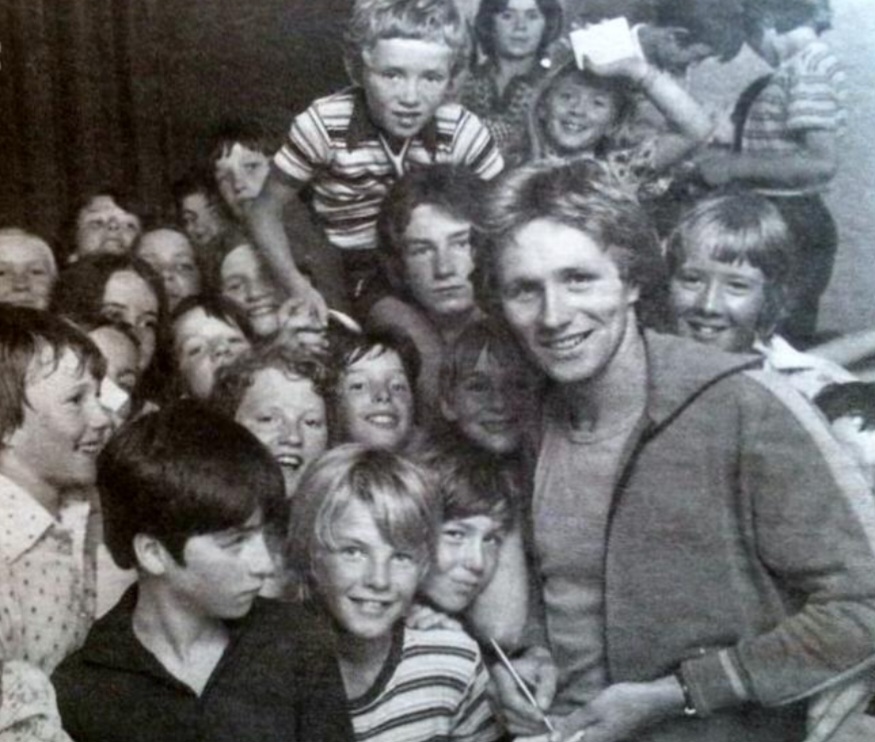
Bono was just 16 and, the following month, he’d spot a notice from Larry Mullen on a noticeboard at Mount Temple Comprehensive School looking to form a band. You know the rest …
****************************************
A few years ago, BBC Four broadcast a television documentary on Irish rock music. The programme ‘A Tale of Two Cities’ – focused on the impact of Dublin and Belfast, and one line from a Dub, Bob Geldof, resonated. “It’s a weird thing about Paddy pop singers,” he said. “The last thing they want to do when they get on telly is talk about their new record or flog it.
“They’re going to go ‘and another thing…!’ and ‘this is wrong!’ – all of them. “They never shut the fuck up, they’re always crapping on. “Whatever about me, get Bono going ….Jaysus, he never shuts up.” We only have to think back to the 2017 Joshua Tree anniversary concert in Croke Park to know the truth of that.
It was probably the only occasion in music history that a rock star has made a speech from the stage in favour of a bid to host the Rugby World Cup. Bono also found time that night to give a shout out to a member of the audience – Taoiseach Leo Varadkar. It wasn’t the first time Bono had cosied up to a Fine Gael Taoiseach.
Back in the summer of 1982, U2 played a concert in Helsinki and returned to Dublin via Heathrow. That’s how Bono found himself in the same airport departure lounge as the then Taoiseach, Garret Fitzgerald.
Bono did what Bono does, marching straight over to Fitzgerald and engaging him in conversation. In an odd quirk of fate, they found themselves in the same row of seats on the flight, so the chat continued. They exchanged contact details and stayed in touch.
That December, Fitzgerald spent the last day of a general election campaign doing a photo-shoot with Bono and his band at Windmill Lane Studios, where U2 were recording their new album. The press was invited along as both parties were keen for publicity. That’s how we know that Fitzgerald told Bono his favourite rock song is ‘Turn, Turn, Turn’ by The Byrds.
The following summer, U2 topped the ‘A Day at the Races’ bill in the Phoenix Park. It was a time when they were on the cusp of global stardom. A month earlier, The Edge – just 21 – had married Aislinn O’Sullivan, with Bono as his best man. But Bono spent much of the fortnight before the gig in meetings of a committee on unemployment. He’d been brought on board by Fitzgerald.
Not very rock ‘n’ roll but, as Geldof pointed out, Irish rock ‘n’ rollers are different.
***************************************************
There was a time when Dublin was so faraway, so close. Hailing from the remote outpost of Glencolmcille in Donegal, it used to seem as remote as Timbuktu. I set foot in the capital for the first time at 14 in 1981. It was all Ronnie Whelan’s fault.
In 1981, Liverpool won their third European Cup in five years and, a couple of months later, they had a date in Dublin. An agreement to play Home Farm in a friendly in Tolka Park had been part of the deal that brought Whelan to Anfield. But the game very nearly didn’t happen.
On August 20, Michael Devine became the 10th hunger striker to die in the H-Blocks. His funeral was two days later in Derry: the same day that Liverpool were due to take on Home Farm.
At 9am, the club groundsman opened the gates to Tolka, and his jaw dropped when he saw the pitch. Hunger strike protestors had broken in overnight and dug the letter ‘H’ – 20 foot wide and one foot deep – into the centre of the playing surface.
Within an hour, Home Farm had gathered a group of volunteers to try and resod the pitch.
Liverpool’s visit was to be a brief one. They were to fly into Dublin in the afternoon and back home straight afterwards. It was actually an Irish journalist who told Reds’ boss Bob Paisley what had happened. Paisley was still at home that morning when he got the call and, as a man who had driven a tank into Rome during the liberation of the Italian capital in World War II, he wasn’t fazed. “We’re going to Dublin to play the game, there’s no problem,” he said.
Paisley was right. Liverpool strolled to a routine 5-0 win. Home Farm made a windfall from the 15,000 crowd, and the pitch held up.
Tolka Park seemed as exotic as the San Siro. Maybe Dublin had something going for it, after all. I was 14 that first time, 16 second time around. There is a world of difference between 14 and 16.
****************************************************
The best book on music to ever come out of Ireland is one that passed the vast majority by. Maybe it was because it was by a poet, Ciaran Carson, and many are allergic to poetry. Blame ‘Soundings.’
Maybe it was because it was about traditional music, which is still terminally uncool in some quarters. But Carson’s ‘Last Night’s Fun’ is the real deal. It should be on the Leaving Cert syllabus.
Each chapter is given the name of a tune; the book framed in the shape of a night’s session. There are diversions on the wonders of fried breakfasts, on the exquisite sorcery of hurling, on the colour of old cigarette packets. To the late poet, music is a way of ”renegotiating lost time”.
He makes the point that Irish traditional music is a primitive artform, with tunes that are different every time they are played. Tunes known only to the musicians as ”the one we play after the one before it”. Like many northerners, Carson spent much time in Donegal, and feasted on the intoxicating mix of life there.
Donegal fiddle music reflects the landscape and the people, a disciplined wildness that is alluring. John Doherty was a fiddler from Ardara, hailing from a Traveller family of tinsmiths and horse traders. He developed his own distinctive style, which leaned heavily on Scottish bagpipe music.
Pete Seeger, the renowned American folk musician, was so entranced that he travelled to Donegal in 1964 to meet Doherty. Remarkably, the footage of Doherty playing for him in a caravan in Carrick is available on YouTube.
It’s the controlled chaos of his jigs, reels and Highlands that draws many in, but slow airs are a fine art too, and Doherty was a master.
Funerals are always a reminder of how much music means to us. Tunes, songs, and hymns are carefully chosen. Often, it is the music at such services that moves people to tears. When did music become an obsession? It was always there, pulsing through the veins.
**********************************************
As a snapshot of how things used to be, it deserves a place in the GAA Museum. It was a sunny September Friday in 1978 and Naomh Columba from Glencolmcille would play in their first Donegal senior county final two days later. This was a time before protein shakes and S&C and game plans, a time when many clubs didn’t even have a dressing room: the Naomh Columba players used to change on a riverbank.
But an effort was made to have them looking good for a big day. That’s how Eunan Cunningham came on gold dust when strolling near his home on the Teelin Road. Luckily, he had a camera to hand and captured a pic of the team’s jerseys drying on a Renault 12. One way to save on energy bills ….
Fast forward 34 years and another photo that should be in the Museum. It’s unclear who first described Comórtas Peile na Gaeltachta as Glastonbury for Gaeilgeoirí, but he was on the money. It has to be seen to be believed.
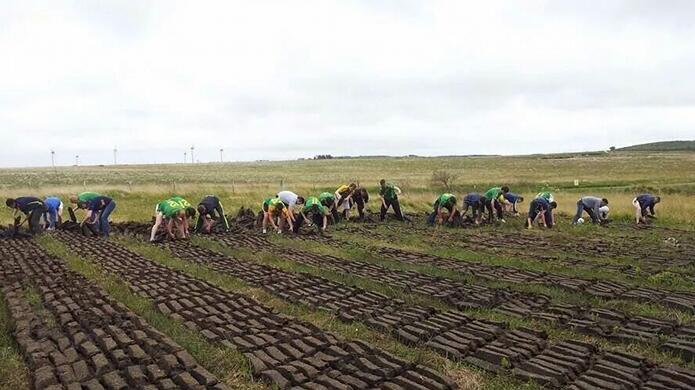
Back in 2014, Naomh Columba were one of the Donegal representatives for the tournament, which was held in Moycullen in Galway that year. After one game, manager PJ McGinley got his players on a bus, and they headed to An Spidéal for a recovery session.
On the way back, they spotted a man labouring on his own in a bog. The shout went up – ”stop the bus!”. Off they trooped, 30 of them – players and the backroom team – and went to work, footing the man’s turf for him. Pics were taken to preserve the moment. They ended up going viral on social media. They made such an impact that Joe Brolly devoted a newspaper column to describing how the turf footers from Naomh Columba summed up all that is good in the GAA. But some needed convincing …

Rummaging through boxes in the attic of the family home in Donegal, I came across ‘The RTE Book’, which was published in 1989. The most fascinating element of it is the list of guests on ‘The Late Late Show’ since it was first broadcast on July 6, 1962.
What was particularly striking was the list of guests that never appeared. By 1975, the Late Late was well into its stride. Gay Byrne was at the helm for its 14th season, and the news agenda was often set by the programme.
Something remarkable happened on May 31 that year which shouldn’t have been remarkable. Mícheál Ó hEithir was the subject of a special Late Late tribute programme – one of several to get such an honour over the years. Ó hEithir was known outside Ireland for his work in horseracing but, in Ireland, he was Mr GAA. Indeed, many local radio commentators are still trying to ape his distinctive style.
What was remarkable about that Late Late tribute was the fact that Ó hEithir was the first GAA figure to be a guest on the programme. A programme that was in its 14th year, remember. Christy Ring, Mick O’Dwyer, Kevin Heffernan, Mick O’Connell, Eddie Keher – were any of them even asked?
Consider this: by 1975, Matt Busby, Bobby Charlton, George Best and Nobby Stiles had all been guests on the Late Late. It seems that Manchester United was more a part of Official Ireland than the GAA.
There was another special Late Late tribute programme in 1984 to mark the GAA’s centenary. But if you exclude that – and the Ó hEithir one – more showjumpers appeared on the Late Late in its first 25 years than Gaelic football and hurling players and managers.
To plenty in Official Ireland, the GAA was about broad bans and narrow minds. Hot Press – a magazine that did some fine work but inflicted some terrible gobshites on us – dismissed football and hurling as ‘bog ball’ and stick fighting. I laughed till I stopped.
But I looked at the GAA differently in 1983. It was all about the club, the county didn’t really impact. I’d never seen Donegal on TV. Didn’t see them in the flesh until the 1990 All-Ireland semi-final defeat to Meath, when I was 23.
Gods make their own importance, as Paddy Kavanagh argues. Local rows mattered more.
***************************************
They were selling hippy wigs in Woolworths. Already what had just whizzed by was being viewed as history. Nostalgia for the ’60s would become a boom industry but, in 1971, most were keen to move on. The writer Tom Wolfe would dub it the ‘Me Decade’ and he wasn’t far wrong.
With the previous decade blowing away the post-war cobwebs, this was about striding forward in the Age of Aquarius while wearing day-glo platform boots.
Things were hunky dory for Bowie, and he was dreaming up Ziggy. A 14-year-old Daniel Day Lewis made his film debut, earning £2 for a tiny part as a vandal in ‘Sunday Bloody Sunday’. On St Patrick’s Day, RTÉ broadcast its first ever colour television programme: the Railway Cup finals in Croke Park. A week earlier, Led Zeppelin had nearly blown the roof off the National Stadium in Dublin.
It was a time when change was in the air, and Eamonn Coghlan – an 18-year-old from Drimnagh in the capital – had to make the biggest decision of his life.
He could run, everyone knew Coghlan could run. The buzz around him in Irish athletics circles had accelerated after he’d won the Leinster colleges cross-country championships and the 5000m track title in 1970.
The scouts in Villanova University in Pennsylvania got wind of his potential. It was a name that resonated here. Ronnie Delany, Olympic 1500m champion in 1956, had gone on a scholarship there. Later, it would become the alma mater of Sonia O’Sullivan, but Coghlan only got through the doors by chance.
“Villanova was the only option. There were rumours about the University of Portland, but nothing ever came of it,” he said. “I got into Villanova at the last minute because a guy had quit his freshman year, so a space became available. “I did my SAT test around this time of year and then did the Leaving Cert.
“It was probably around August that I was formally offered a scholarship. I had three weeks to get ready. “Villanova had a serious aura about it, no question about it – especially here because of Ronnie Delany. “It was the best middle-distance academy in the world. In order to thrive there, you really had to raise your game, big time.”
Anyone who has ever come across Coghlan will have been blown away by his breezy personality. Outgoing and very comfortable in his own skin. He feels that is his natural personality, but it might have remained hidden but for his move to the US.
“The one thing I would say that America gave me was an opportunity to allow that confidence I had naturally to come out,” he said. “I was able to be outspoken, able to speak confidently.” Eamonn Coghlan was Bono when Bono was still Paul Hewson.
************************************************
IT was a good day for Bono. It was the greatest day for Eamonn Coghlan. It was the worst of all for Brian McEniff. Even now, four decades on, he curses August 14, 1983. That night, he headed off on his own to boil his head.
In the hot scary summer of 1983, that seemed the right thing to do. Hours earlier, Donegal had led Galway for most of their All-Ireland semi-final only for a late Val Daly goal to shatter their dreams.
Donegal hadn’t even contested an Ulster final until 1963, didn’t win one until 1972. This was only their third ever Championship game in Croke Park, but it was the first one where they really felt confident of winning.
McEniff was the Donegal manager, and he was silent and brooding at the post-match meal in the Skylon Hotel. Eventually, he had enough, going outside to hail a taxi and he pointed the cab towards Rathmines. McEniff wandered around Belgrave Square for a while, eventually sitting on a park bench, lost in his thoughts.
He stayed there until 6am. “Boiling my head, I call it. I often do it when there are family or business or football troubles.”
When they were doing battle in that ’83 semi-final, U2 were a few miles away in the Phoenix Park, getting ready to take the stage for their first major outdoor gig in Ireland. Around 1200 miles away in Helsinki, Eamonn Coghlan ran the race of his life to win World Championship gold over 5000m.
One of the biggest cheers of the day at the Phoenix Park came when MC Dave Fanning announced the result from the stage. The same thing happened in Croke Park, when news of Coghlan’s win was flashed up on to the Nally Stand scoreboard.
****************************************************************
No harm in borrowing a few of your words, Stephen Patrick.
Sixteen, clumsy and shy. Ain’t that the truth.
Speak, memory.
So, what was the Phoenix Park like?
Ah, it was magical. Another heatwave summer to match that of ’76.
The air was hot and heavy with hormones.
It wasn’t all sweetness and light. There were gatecrashers. There were fights, common at gigs in the ’80s.
Annie Lennox of the Eurythmics came in for serious abuse, with chants telling her to fuck off back to England. As a proud daughter of Aberdeen, it’s no wonder she took offence: given as good as she got.
Perfect Crime, from north of the border, passed most of us by. So did the plodding reggae of Steel Pulse. Big Country were lively and on it, with poor Stuart Adamson getting the crowd going. But Simple Minds came very close to stealing the show from U2.
Jim Kerr was friendly with Bono and the U2 man lived in a cottage in Howth at the time. The night before the gig, Bono and Kerr drove around the area, transfixed by a 16-year-old’s voice on a demo tape. The voice belonged to Sinéad O’Connor. She wrote the song ‘Take My Hand’ when she was just 14.
O’Connor recorded it two years later as a demo with In Tua Nua, turning up at the studio carrying a school bag on which she had etched Kate Bush’s name.
Bono and Kerr recognised something magical in those few minutes.
Just hours later, Kerr and his Glasgow mates were in glorious form.
They were touring the superb ‘New Gold Dream’ album and had a back catalogue to die for. But they were new to me. I was blown away by songs like ‘I Travel’, ‘The American’ and ‘New Gold Dream’ itself.
In time, Simple Minds would be seen as having gone the U2 route, with big stadium anthems suited to American audiences. It would be said that the influence of U2 was apparent.
It worked both ways, though. After that tour, U2 would go away and record ‘The Unforgettable Fire’, still one of their best and most significant albums. One that had plenty of early Simple Minds in its grooves.
At the Phoenix Park, U2 were in their own groove, starting with ‘Out of Control’ and turning it up to 11 from there to the finish. They’d had a few hit singles by then, had done the Top of the Pops thing, but there was the feeling that was just a warm-up. They were about to take off.
Annie Lennox returned to the stage for a powerful and emotional final encore of ’40’. Long after all had taken their final bows, the crowd echoed its refrain – ‘how long to sing this song?’
40 years on and counting.


 The Blackpool Sentinel
Marvellous ramble of a read. Magic
LikeLiked by 1 person
Lovely piece Kieran x
LikeLike
Really evocative piece. It was one of my first ever gigs. My cousin/Father paid for it. We sneaked in Naggins and Flagons… I was 16, and had previously seen Eric Clapton in the Stadium… but this was different. It was wonderful. So many mullets! Walked home to Dundrum from Ohienix Park. Fell asleep in my double denims… the Memories… Next gig was Dalymount with Motorhead and Sabbath. Won tickets to that as I was too skint to afford them…..
LikeLike
Thanks so much for reading and for taking the time to comment. We really appreciate it. All my best. Colm
LikeLike